

Choosing Between Semi and Fully Automatic Stretch Wrapping

Updated: Jun 9
Key Takeaways
Semi-automatic wrappers typically handle 15 to 30 pallets per hour and require an operator for film attachment, cycle start, and tail cutting.
Fully automatic systems integrate with conveyors to wrap 40 to 120+ pallets per hour without operator intervention during the cycle.
Semi-automatic machines have lower capital costs but ongoing labor expense; fully automatic systems start around USD 50,000 plus conveyor infrastructure.
Operations wrapping 80 to 100+ pallets per day typically justify the ROI on fully automatic equipment through labor savings and consistent film usage.
Semi-automatic remains the better fit for mixed SKUs, variable volumes, and facilities with limited floor space.
High-quality machine stretch wrap film is essential for both systems to perform consistently and minimize film waste.
Choosing between semi automatic vs fully automatic stretch wrapping shapes daily labor allocation and long-term capital budgets. When comparing the two, operations managers frequently overlook key factors like throughput, labor cost per pallet, and integration needs, focusing solely on machine price. Volume, product mix, and your facility’s pallet handling capabilities will determine the correct choice. This guide explains system functions, expenses, and comparative advantages.
How Each System Works
The primary distinction between these technologies lies in how operators are involved and how they integrate with conveyors. Semi-automatic machines require human intervention to begin and conclude each cycle, whereas fully automatic systems manage the entire operation independently.
Semi-Automatic Stretch Wrapping
A semi-automatic stretch wrapper relies on operator input at multiple points in each cycle:
Loading: A forklift operator places the pallet onto the turntable.
Film attachment: The operator secures the film tail to the load and presses the start button.
Wrapping cycle: The machine wraps to preset parameters for tension, layers, and overlap.
Finishing: Once the cycle ends, the operator cuts the film and tucks the tail.
The usual output is 15 to 30 pallets per hour; however, most sites manage 20 to 25, influenced by how efficient the workers are and how complicated the loads are. Remote-controlled cycle starts and auto film attachment in advanced semi-automatic models boost speed while keeping the operator involved.
Fully Automatic Systems
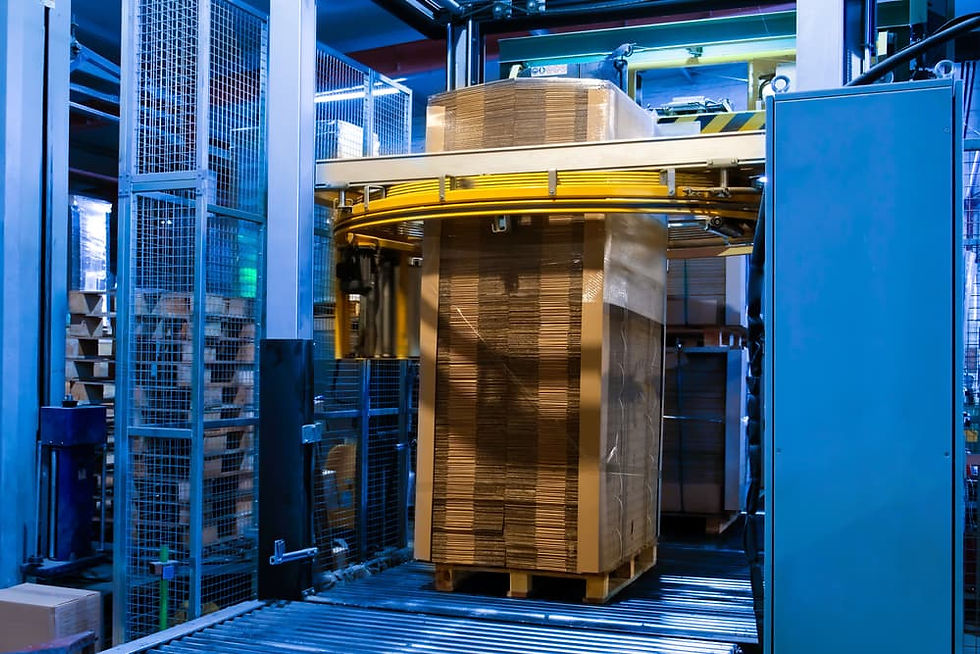
Fully automatic stretch wrapping runs as part of an inline packaging system. The pallet enters the wrapping zone via conveyor, and the machine handles every step:
Detection: Photo-eye sensors detect the pallet's arrival, dimensions, and height.
Film engagement: The machine grips and attaches the film automatically.
Wrapping: The carriage applies pre-stretched film at consistent tension.
Cut and seal: The film is cut and the tail is heat-sealed or brushed onto the load.
Exit: The conveyor moves the finished pallet out and the next one in.
Throughput ranges from 40 to over 120 pallets per hour. Turntable models run on the lower end, while rotary arm and rotary ring systems push the upper limits.
Cost and ROI Analysis
The price gap between the two systems is substantial. Semi-automatic wrappers start at a lower capital investment, often within reach of small to mid-sized operations. Fully automatic systems start around USD 50,000 for the wrapper alone, with conveyor infrastructure, integration, and installation adding significantly to the total cost.
Labor savings drive most ROI calculations. Each pallet wrapped on a semi-automatic machine ties up an operator and forklift for two to three minutes. On a fully automatic line, that operator moves pallets continuously while the machine works independently. For an operation running two shifts, the freed-up labor often equates to one full position.
The ROI breakpoint usually falls between 80 and 100 pallets per day. Higher capital costs are recouped in 2-3 years by facilities exceeding this threshold due to savings in labor, film, and damage claims.

Operational Advantages and Limitations
Each system is suited for specific operational profiles, in addition to throughput and cost. The decision becomes concrete once you know which one fits your facility.
When Semi-Automatic Makes Sense
Lower daily volumes: Operations wrapping fewer than 50 pallets per day rarely justify the capital cost of full automation.
Mixed SKUs: When pallet sizes, weights, and wrap patterns vary, semi-automatic flexibility outperforms a rigid inline setup.
Limited floor space: Smaller warehouses often lack the room needed for conveyor runs, infeed and outfeed zones, and safety guarding.
Seasonal volume swings: Businesses with peak and off-peak cycles benefit from the lower running cost of a semi-automatic system during slower months.
When Fully Automatic Delivers Value
Consistent high volume: Daily output of 80 to 100+ pallets makes the labor savings significant enough to fund the upgrade.
Standardized loads: Uniform pallet dimensions and weight allow the machine to run preset programs without adjustment.
Existing conveyor lines: Operations already running palletizers or conveyor-based packaging integrate full automation more cost-effectively.
Labor constraints: Markets with high wages or persistent labor shortages amplify the value of removing operators from the wrapping step.
Making Your Decision
Picking between semi automatic and fully automatic stretch wrapping systems comes down to a few practical calculations:
Work out your current labor cost per wrapped pallet, including forklift time and operator wages.
Project volume growth over the next three to five years to see whether you'll grow into a fully automatic system anyway.
Audit available floor space and check whether conveyor integration is physically possible.
Assess product mix flexibility needs, since fully automatic systems work best with predictable load profiles.
Certain operations fall into an intermediate category, unsuitable for either extreme. Advanced semi-automatic machines, equipped with auto film attach, hot seal, and remote-start capabilities, reduce the need for manual intervention, allowing forklift operators to manage most of the cycle remotely.
Choosing Quality Film for Either System
Whether you run a semi-automatic turntable or a fully automatic rotary arm system, the film itself decides how well the machine performs. Inconsistent film causes breaks during high-speed cycles, uneven tension, and load failures in transit. Quality machine stretch wrap with reliable cling, puncture resistance, and stretchability protects your loads and keeps your equipment running at its rated throughput.
MMP Corporation manufactures M Stretch machine-grade pallet wrap using metallocene polymer technology for durability and stretchability across all pallet-wrapping machines. With over 35 years of combined experience as a stretch film manufacturer and a global supply network spanning Japan, Europe, Australia, and New Zealand, we offer customized film specifications to match your equipment's wrap programs and load profiles.
Contact our team for technical specifications on machine stretch wrap built for both semi-automatic and fully automatic operations.
References:
The Effect of Stretch Wrap Pre-stretch on Unitized Load Containment. Retrieved May, 2026, from https://digitalcommons.calpoly.edu/theses/857/
Frequently Asked Questions About semi automatic vs fully automatic stretch wrapping
Q: What is the main difference between semi automatic and fully automatic stretch wrapping?
A: Semi-automatic stretch wrapping requires an operator to load the pallet, attach the film, start the cycle, and cut the tail at the end. Fully automatic systems use conveyors and photo-eye sensors to handle the entire wrapping cycle without operator involvement, including film attachment, cutting, and tail sealing.
Q: At what daily pallet volume should I consider upgrading to a fully automatic system?
A: The ROI breakpoint typically falls between 80 and 100 pallets per day. Operations consistently above this threshold tend to recover the higher capital cost within two to three years through labor savings, reduced film waste, and improved load consistency. Facilities below this range usually find semi-automatic equipment more cost-effective.
Q: How much do fully automatic stretch wrappers cost compared to semi-automatic models?
A: Fully automatic stretch wrappers start around USD 50,000 for the machine alone, with additional costs for conveyor infrastructure, integration, and installation. Semi-automatic models have a significantly lower entry point and lower installation requirements, making them more accessible for small to mid-sized operations.
Q: Can the same stretch film be used in both semi automatic and fully automatic machines?
A: Yes, quality machine-grade stretch film is designed to work across both system types, though optimal film gauge and pre-stretch capacity may differ. Fully automatic systems with high-speed cycles often perform better with films engineered for high pre-stretch applications, while semi-automatic operations have more flexibility in film selection.
Q: What throughput can I expect from a semi-automatic stretch wrapper?
A: Typical semi-automatic stretch wrappers handle between 15 and 30 pallets per hour. The actual rate depends on operator efficiency, load size and shape, wrap pattern complexity, and the specific machine model. Advanced models with auto film attach and remote-start features can push throughput toward the higher end of this range.


